
Mud season, dust, washboarding, and endless re-graveling are what push most rural owners to ask about asphalt. Here is what the conversion actually involves, from the site walk to the base, and where recycled millings fit in if the timing calls for a middle step.
Porter Sealcoating & Paving · Published August 6, 2026
Every fall, gravel driveways across the Portland metro and the Gorge start doing the same thing: they wash out, they rut, and they track mud straight into the garage. That’s usually when the calls about converting to asphalt start coming in. A gravel-to-asphalt conversion is a bigger job than most people expect, but it’s also more straightforward than the horror stories suggest, as long as the base underneath gets the attention it needs before any pavement goes down.
Gravel holds up fine for a while, then the seasons start working against it. Mud season turns the first stretch near the road into a mess that gets tracked through the house all winter. Summer swings the other way: dry gravel throws dust every time a car comes down the lane, and it settles on the porch, the garden, and anything parked nearby. In between, daily traffic grinds the surface into washboard ridges that rattle a car at anything over a crawl.
Snow and ice make it worse. A plow blade catches loose gravel and drags rock into the yard along with the snow, so every storm means less driveway and more cleanup once spring comes. And the standard fix, hauling in another load of gravel and grading it back into shape, isn’t a one-time job. It’s a chore that repeats every year or two, and the driveway never really gets better. It just gets briefly less bad.
One thing that surprises people: converting to asphalt doesn’t mean tearing out and hauling off everything that’s already there. Existing gravel that gets graded, shaped, and compacted correctly often becomes part of the new base instead of a dumpster load. The material is already on site and already partway to where it needs to be. Reusing it as base is standard practice, not a shortcut.
A gravel-to-asphalt conversion is really five jobs stacked on top of each other. Rushing or skipping any one of them is where driveways go wrong.
Porter walks the driveway in person before any quote goes out, checking the grade, the drainage, the length, and how the existing gravel base is holding up. A long rural lane, a steep section, or a drainage problem all change the plan.
The crown gets re-established so water sheds to the sides instead of pooling in the middle, and low spots get corrected before anything else happens. Skip this step and new asphalt just fails in the same spots the gravel did.
Existing gravel and any added base rock get graded to the right depth and compacted with equipment until it locks into a firm, stable surface. This step actually determines how long the pavement lasts: a soft base means a driveway that cracks and settles no matter how good the asphalt on top is.
Once the base passes muster, our paving crew lays and compacts the hot-mix asphalt, usually in a single pass on a residential driveway.
The transitions where the new asphalt meets the garage, the road, or the yard get finished clean, so there’s no lip left to catch a tire, a mower, or a shovel.
Full asphalt isn’t the only step up from gravel. Recycled asphalt millings sit in between: reclaimed asphalt spread, graded, and compacted into a firmer, dust-reduced surface for a budget-friendlier price than new pavement. It won’t look or feel exactly like hot-mix asphalt, since there’s no hot-poured binder locking every piece together, but it holds up better than plain gravel and cuts down on the dust and washboarding that make gravel driveways frustrating in the first place. More on that option is on our gravel and recycled millings page.
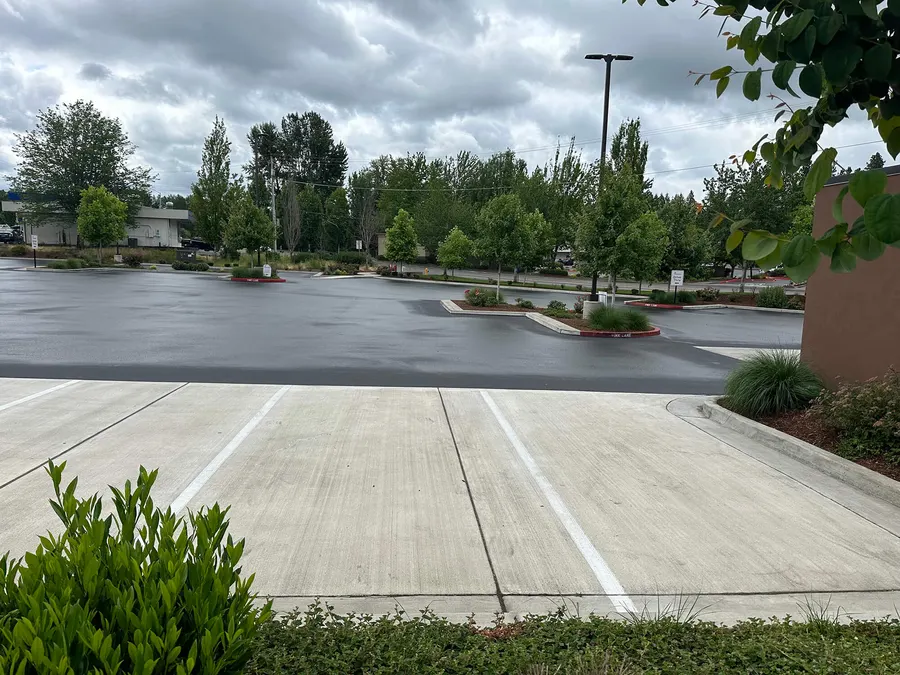
Millings also work well as a first step instead of a final answer. A well-compacted millings surface makes a solid base to pave over later, so it’s a practical way to get off rough gravel now and put off the full paving job until the budget allows it.
Asphalt isn’t the right call for every driveway, and honesty matters more than closing a sale. A long lane on a rural or Mt. Hood corridor property can be a bigger investment than the timing calls for, especially if the budget needs to happen in stages. If the driveway runs long, if traffic is light enough that gravel still does the job, or if this year’s budget just isn’t there yet, staying with well-graded gravel, or stepping up to recycled millings instead, is often the sensible move. Nobody here talks a long rural lane into pavement it doesn’t need yet.
New asphalt keeps curing and settling for months after it’s laid, not just the first day or two. Hairline cracks or small settling lines can show up in that first year as the base finishes locking into place, especially over any spot that was soft or uneven before paving. That’s normal, not a sign the job was done wrong. If something does need attention beyond normal settling, that’s routine repair and maintenance work, not a redo.
Once the new pavement has had time to cure, the next milestone is sealcoating, then again every 3–5 years after that. Sealcoating protects the asphalt from sun, water, and de-icing chemicals, and keeps that fresh, jet-black look instead of letting the surface gray out and dry-crack. It’s the maintenance step that makes a new asphalt driveway actually last.
If a full pave is the right move for your driveway, that’s the job our asphalt paving team handles start to finish. Here’s what one gravel-to-asphalt conversion looked like from the other side:
“Porter Sealcoating and Paving did a great job putting down black top on my gravel driveway! I had them come back again to sealcoat their work and it looks fantastic. They are professional and it was easy to do business with them. I’m very happy with the outcome.”
Free estimates on gravel, millings, or a full asphalt conversion for your driveway.
Tell us about your driveway and where it stands today. We’ll follow up within 1 business day with honest options and a free estimate.
Tell us a little about the project and we’ll take it from there.