Home Service Area Sandy
Sandy sits at the top of the US-26 corridor, the last real stretch of services before Mt. Hood takes over. Rain turns to snow and ice here well before it does down in Gresham or Portland, and that freeze-thaw cycle is hard on driveways, shop aprons, and the long private lanes running out toward Cherryville and the foothills.
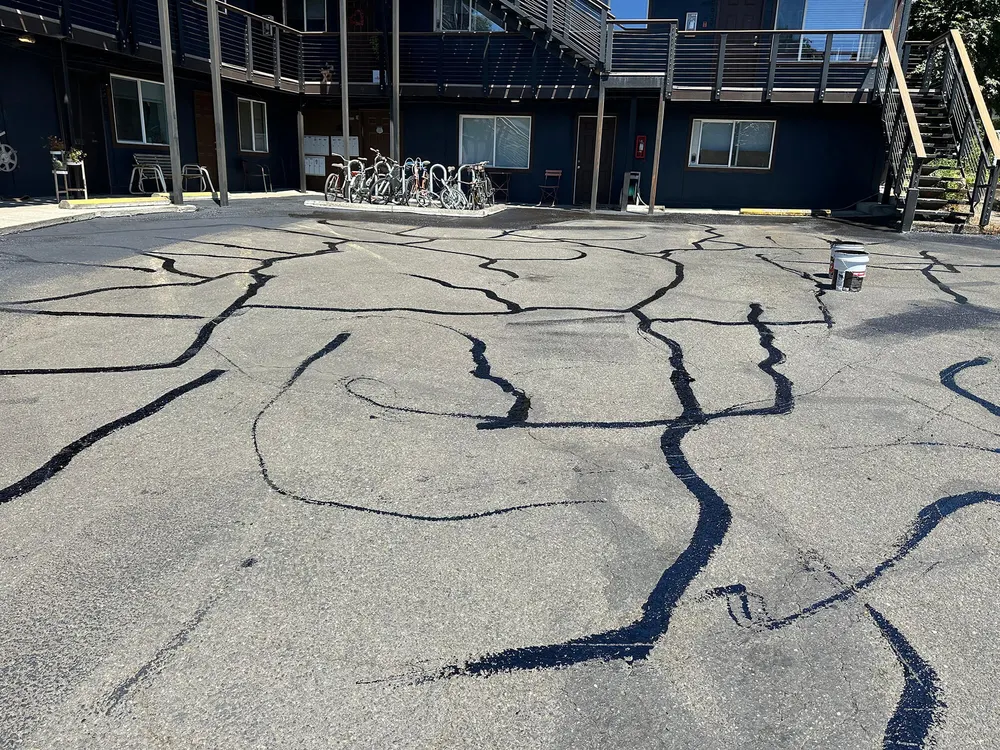
Storms that fall as rain in Gresham often cross over to snow and ice by the time they reach Sandy. That freeze-thaw cycle is what actually breaks pavement down: water works into a hairline crack, freezes, expands, and by spring the crack is wider than it was in the fall. Studded tires and plow blades add their own wear on top of that, especially at driveway aprons and turnouts where vehicles slow down and cut the wheel.
Crack filling and patching before the first hard freeze keeps water out of the pavement all winter instead of letting it do damage while the ground stays frozen. A sealcoat every 3–5 years does the same job on a bigger scale, laying down a protective layer that keeps water, sun, and studded tires off the asphalt underneath.
Freeze-thaw widens hairline cracks every winter
Studded tires and plow blades wear down driveway aprons
Crack filling works best before the first hard freeze
Sealcoating every 3–5 years protects against water and UV
In town, lots run small. Head out toward Cherryville and the foothills and it’s a different story: long private drives, detached shops, and RV pads spread across real acreage. A raw gravel driveway that isn’t ready for asphalt yet gets graded and surfaced with gravel or recycled millings, a practical, lower-cost step that still holds up under a truck and trailer. When the budget allows for the full upgrade, paving it properly starts with grading the crown first, so water sheds off the surface instead of pooling and refreezing overnight.

Paving and sealcoating both need dry pavement and mild temperatures. Once the rain turns to snow on the mountain corridor, the work window closes until spring.
“I got a gravel part of my driveway filled in and the entire driveway sealcoated. The team did a great job. They showed up on time and didn’t leave a mess.”
Sandy sits higher up the US-26 corridor, so the first freeze, snow, and ice usually show up here before they reach Gresham or Portland below. That is why we recommend crack filling and a sealcoat check in early fall, before the weather has a full season to work on the pavement.
Long private drives, shop aprons, and RV pads out toward Cherryville and the foothills vary too much for a phone estimate. We look at the actual length, grade, and base in person before giving a number, so every rural driveway quote starts with a site visit, not a guess.
Yes. Many acreage properties around Sandy start with gravel or recycled millings and pave later when the budget allows. A well-graded gravel or millings base makes a solid foundation to build the asphalt on when you are ready.
Studded tires and plow blades add real wear at driveway aprons and turnouts, on top of what freeze-thaw already does to the surface. Staying on a 3–5 year sealcoat cycle keeps the pavement sealed against water before studs and ice can dig into a crack.
Tell us about your driveway, shop apron, or private road, in town or out past Cherryville. We will be in touch within 1 business day with a free estimate, while the paving season is still open.
Tell us a little about the project and we’ll take it from there.